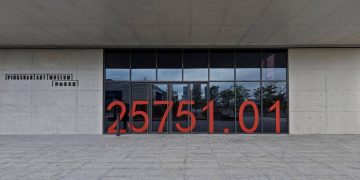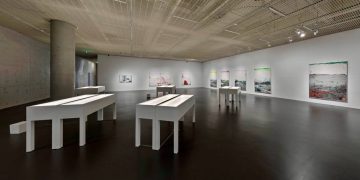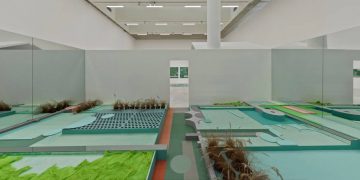
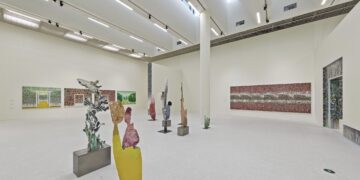
坪山美术馆|深圳当代艺术家系列|总序

历史的进入与深耕


深圳当代艺术的发展最早可以溯源至85新潮时期,当时深圳作为一个新兴的、充满想象张力的城市,催生和兴起了一些零星的艺术行动和个体实践,但其时,深圳的使命还是在于经济和政治领域的试验与奇迹创造,文化艺术的发展处于 “萌而未发” 的状态。

直至1997年,深圳同一年建设和开放了何香凝美术馆和关山月美术馆,深圳的当代艺术由此呈现出了日渐明朗的学术定位和版块性的崛起和活力。而2005年,由黄专先生参与发起的OCAT在深圳正式成立,标志着深圳当代艺术的主体意识的觉醒,可以说中国当代艺术的深圳立场和独立工作,助推了中国当代艺术的学术梳理和价值建构。深圳的当代艺术在这个阶段,也经历了空降式和事件型艺术的兴奋期,涌现出了数目惊人的双年展。客观而言,这一系列实践松动和培育了深圳当代艺术的土壤,也推动和塑造了今天的深圳当代艺术发展的基本面貌。

坪山美术馆的成立,便是在此背景下的应时而生和顺势而为。在过去两年多的工作中,我们始终强调以历史的眼光、当代的支点和审慎的判断来介入当代艺术的现场和地方艺术的建设,此次推出的深圳艺术家个案系列,也是基于深圳当代艺术的现实情境和发展阶段,期望以激发、助力和沉淀的行动推动深圳当代艺术的主体建构。我们希望通过个案的梳理来呈现深圳当代艺术的结构与肌理,肌理越饱满,城市也会更有精神的厚度和潜能。

深圳当代艺术呈现出个体迁徙、频繁流动的状态,我们对 “深圳当代艺术家” 的界定也因应这种特质。他们中既有深耕二三十年的艺术家梁铨周力,也有在深圳开启其艺术的重要岁月后又北上的蒋志,还有新生代的80后艺术家李燎;既有近几年离开学院迁徙到深圳的薛峰,也有处于候鸟状态、将深圳作为 “落脚城市” 的沈少民。我们都将他们纳入到深圳当代艺术家的范畴进行考察、梳理和展览呈现。我们当然深知其判断本身一方面会推动地方艺术生态的基础建设,同时也意味着这个工作会充满挑战和艰辛。但我们坚信,发展到今天的深圳当代艺术,亟需对自己过去短暂而丰富的历史进行回顾、梳理和审视,并对此时此地的现场形成观察和判断。深圳当代艺术要继续靠前走,就需要有一些自我的审视和冒险。

记得已故的深圳当代艺术的重要推动者、艺术评论家黄专说过一句话:“不是什么时代都能进入历史,只有那些真正改变了我们的生活价值的时代才能进入历史;不是任何人都能进入历史,只有那些真正具有创造能力的人才能进入历史。” 坪山美术馆就是在寻找那些 “改变” 和 “创造”,并将其编织到当代艺术的深圳叙事之中,我们希望以此为深圳、为中国南方当代艺术生态搭建出一些牢固和有时间重量感的 “基础设施”。

坪山美术馆馆长  刘晓都
深圳当代艺术家系列读本策划  钟刚
Pingshan Art Museum | Shenzhen Contemporary Artists Series | Prelude

Making History and Making Endeavors


The development of contemporary art in Shenzhen can be traced back to as early as 85 New Wave period. At that time, as a burgeoning and imaginative city, Shenzhen gave birth to some sporadic art movements and individual practices. However, Shenzhen then was obligated to undertake the mission of conducting experiments and thereby working miracles in the economic and political fields. As a result, culture and art were emerging, with dramatic growth yet to come.

Until 1997, Shenzhen witnessed the building and opening of He Xiangning Art Museum and Guan Shanyue Art Museum in the same year. Contemporary art in Shenzhen has shown an increasingly clear academic positioning, while demonstrating the rise and vitality of Pearl River Delta in the contemporary art context. In 2005, OCAT, initiated by Huang Zhuan among others, was formally established in Shenzhen, marking the awakening of the subjective consciousness of contemporary art in Shenzhen. It can be concluded that Shenzhen position and its independent efforts concerning Chinese contemporary art have helped facilitate the academic research and value construction of Chinese contemporary art. At this stage, the contemporary art in Shenzhen has also witnessed the sprouting of non-indigenous and events-based art when a surprising number of biennales came out. Objectively speaking, the series of practices loosened and cultivated the soil for contemporary art in Shenzhen, while promoting and shaping the basic appearance of the development of contemporary art in Shenzhen today.

Against this backdrop, Pingshan Art Museum was established as the times demanded. Over the past two years of work, we have been emphasizing historical perspectives, contemporary pivots and prudent judgment, which should play a role in the construction of contemporary art scenes and local art. Based on the realistic situation and development stage of contemporary art in Shenzhen, the Shenzhen Contemporary Artists Series is expected to promote the major construction of contemporary art in Shenzhen by means of inspiring, assisting and inheriting acts. We hope to present the structure and texture of Shenzhen contemporary art through the analysis of individual cases. The richer the texture, the greater intellectual thickness and potential the city will have.

The contemporary art in Shenzhen presents a state of individual migration and frequent movement, which prompts the definition of “Shenzhen Contemporary Artists”. Among them are the artists Liang Quan and Zhou Li who have been involved into the field for 20 or 30 years, Jiang Zhi who went north after the momentous years of starting out a career as an artist in Shenzhen, as well as Li Liao born in 1980s. Besides, the said artists also include Xue Feng who has left school and moved to Shenzhen, and Shen Shaomin, who treats Shenzhen as a temporary place of lodging like a migratory bird. We categorize them as Shenzhen contemporary artists for inspection, sorting and exhibiting. Certainly, we are aware that the judgment itself will promote the infrastructure construction of the local art ecology on the one hand, which also means that this work will be full of challenges and hardships. However, we firmly believe that the shenzhen contemporary art today needs to be reviewed, sorted out and examined concerning its short yet rich history, thus resulting in observations of and judgments on the scene here and now. Should the contemporary art in Shenzhen advance, it needs some self-examination and adventure.

I recall that the late Huang Zhuan, an important promoter of contemporary art in Shenzhen and an art critic, said: “Not all times can go down in history. Only those times that have truly changed the value of our lives can make history; not everyone can go down in history. Only those who are genuinely able to produce creations can pass into history.” Pingshan Art Museum is looking for those “changes” and “creations”, while weaving them into the narrative of Shenzhen contemporary art. We hope to build some solid and time-honored “infrastructure” for Shenzhen and for the contemporary art ecology in southern China.

Liu Xiaodu, Director of Pingshan Art Museum
Zhong Gang, Editor of Readers of Shenzhen Contemporary Artists Series

迢迢:薛峰个展|深圳当代艺术家系列之一

Xue Feng: Far Far | Shenzhen Contemporary Artists Series No.1

周力:桃花源 · 迹|深圳当代艺术家系列之二

Zhou Li: Tracing Peach Blossom Spring | Shenzhen Contemporary Artists Series No.2

沈少民的科学简史|深圳当代艺术家系列之三

♛ Shaomin Shen’s Brief History of Science | Shenzhen Contemporary Artists Series No.3

王川:方-圆|深圳当代艺术家系列之四

Wang Chuan: Circumference | Shenzhen Contemporary Artists Series No.4

蒋志:刻舟的人|深圳当代艺术家系列之五

♛ Jiang Zhi: The Man Who Carves the Boat | Shenzhen Contemporary Artists Series No.5

李燎:老婆去创业了|深圳当代艺术家系列之六

Li Liao: The Wife Went to Start a Business | Shenzhen Contemporary Artists Series No.6

严善錞:富春|深圳当代艺术家系列之七

Yan Shanchun: Fu Chun | Shenzhen Contemporary Artists Series No.7

梁铨:故岭|深圳当代艺术家系列之八

Liang Quan: Green | Shenzhen Contemporary Artists Series No.8